uniklinikHD Neuro6771carinakircher

Research findings related to UNITE work packages A01/A03/A06/B01/B04/C01/C02

Advances in molecular understanding and diagnostic precision of glioblastoma enable the identification of key genetic alterations in a timely manner and, in principle, allow treatments with targeted compounds based on molecular markers. Here we report the results of the phase 1/2 umbrella trial NCT Neuro Master Match (N2M2), which evaluated targeted treatments in 228 patients with newly diagnosed glioblastoma without O6-methylguanine DNA-methyltransferase promoter hypermethylation. Stratification for treatment was conducted by a trial-specific molecular tumor board across five subtrials, each evaluating a targeted therapy—alectinib, idasanutlin, palbociclib, vismodegib or temsirolimus—selected according to the best-matching molecular alteration. Patients without matching alterations were randomized between subtrials without strong biomarkers using atezolizumab and asunercept, and the standard of care (SOC), temozolomide. All received radiotherapy. The primary endpoints were dose-limiting toxicities (phase 1) and progression-free survival at 6 months (PFS-6; phase 2). Secondary endpoints included safety and tolerability, as well as overall survival (OS). The subtrials for alectinib and vismodegib did not open as they did not have matching patients. The idasanutlin subtrial (n = 9) was terminated early at the discretion of the manufacturing company. The temsirolimus subtrial (n = 46) demonstrated a PFS-6 of 39.1% and median OS of 15.4 months in patients with activated mammalian target of rapamycin (mTOR) signaling compared to a PFS-6 at 18.5% in the SOC group (n = 54), meeting the primary endpoint. The atezolizumab (n = 42), asunercept (n = 26) and palbociclib (n = 41) subtrials did not meet the primary endpoint for efficacy. The safety signals of N2M2 match prior experiences with the drugs in quality and quantity; no relevant negative interaction with the parallel radiotherapy was noted. The results of the N2M2 trial support further investigation of temsirolimus in addition to radiotherapy in patients with newly diagnosed glioblastoma with activated mTOR signaling. ClinicalTrials.gov registration: NCT03158389.

Link to Publication

Wick W*, Lanz LM, Wick A, Harting I, Dettmer S, Suwala AK, Ketter R, Tabatabai G, Seliger C, Glas M, Burger MC, Timmer M, Ringel FA, Mildenberger I, Schulz-Schaeffer WJ, Winkler F*, König L, Herold-Mende C*, Eisenmenger A, Pfister SM*, Renovanz M, Bendszus M*, Sahm F*, Platten M*, Kessler T*. Molecularly matched targeted therapies plus radiotherapy in glioblastoma: the phase 1/2a N2M2 umbrella trial. Nat Med. 2025 Oct;31(10):3534-3541. doi: 10.1038/s41591-025-03928-9. Epub 2025 Sep 5. PMID: 40913172; PMCID: PMC12532562. * UNITE Principal Investigators

uniklinikHD Neuro6762carinakircher scaled e1780386352196

Research findings related to UNITE work packages A03/B01/B03

T cell receptor-engineered T cells (TCR-T) could be advantageous in glioblastoma by allowing safe and ubiquitous targeting of the glioblastoma-derived peptidome. Protein tyrosine phosphatase receptor type Z1 (PTPRZ1), is a clinically targetable glioblastoma antigen associated with glioblastoma cell stemness. Here, we identify a therapeutic HLA-A*02-restricted PTPRZ1-reactive TCR retrieved from a vaccinated glioblastoma patient. Single-cell sequencing of primary brain tumors shows PTPRZ1 overexpression in malignant cells, especially in glioblastoma stem cells (GSCs) and astrocyte-like cells. The validated vaccine-induced TCR recognizes the endogenously processed antigen without off-target cross-reactivity. PTPRZ1-specific TCR-T (PTPRZ1-TCR-T) kill target cells antigen-specifically, and in murine experimental brain tumors, their combined intravenous and intracerebroventricular administration is efficacious. PTPRZ1-TCR-T maintain stem cell memory phenotype in vitro and in vivo and lyse all examined HLA-A*02+ primary glioblastoma cell lines with a preference for GSCs and astrocyte-like cells. In summary, we demonstrate the proof of principle to employ TCR-T to treat glioblastoma.

Link to Publication

Chih YC, Dietsch AC, Koopmann P, Ma X, Agardy DA, Zhao B, De Roia A, Kourtesakis A, Kilian M, Krämer C, Suwala AK, Stenzinger M, Boenig H, Blum A, Pienkowski VM, Aman K, Becker JP, Feldmann H, Bunse T* , Harbottle R, Riemer AB, Liu HK* , Etminan N, Sahm F* , Ratliff M* , Wick W* , Platten M* , Green EW, Bunse L.* Vaccine-induced T cell receptor T cell therapy targeting a glioblastoma stemness antigen. Nat Commun. 2025 Feb 1;16(1):1262. doi: 10.1038/s41467-025-56547-w. PMID: 39893177; PMCID: PMC11787355. * UNITE Principal Investigators

uniklinikHD Neuro6272carinakircher

Research findings related to UNITE work packages A06/A07/B06N

Glioblastomas are invasive brain tumors with high therapeutic resistance. Neuron-to-glioma synapses have been shown to promote glioblastoma progression. However, a characterization of tumor-connected neurons has been hampered by a lack of technologies. Here, we adapted retrograde tracing using rabies viruses to investigate and manipulate neuron-tumor networks. Glioblastoma rapidly integrated into neural circuits across the brain, engaging in widespread functional communication, with cholinergic neurons driving glioblastoma invasion. We uncovered patient-specific and tumor-cell-state-dependent differences in synaptogenic gene expression associated with neuron-tumor connectivity and subsequent invasiveness. Importantly, radiotherapy enhanced neuron-tumor connectivity by increased neuronal activity. In turn, simultaneous neuronal activity inhibition and radiotherapy showed increased therapeutic effects, indicative of a role for neuron-to-glioma synapses in contributing to therapeutic resistance. Lastly, rabies-mediated genetic ablation of tumor-connected neurons halted glioblastoma progression, offering a viral strategy to tackle glioblastoma. Together, this study provides a framework to comprehensively characterize neuron-tumor networks and target glioblastoma.

Link to Publication

Tetzlaff SK, Reyhan E, Layer N, Bengtson CP, Heuer A, Schroers J, Faymonville AJ, Langeroudi AP, Drewa N, Keifert E, Wagner J, Soyka SJ, Schubert MC, Sivapalan N, Pramatarov RL, Buchert V, Wageringel T, Grabis E, Wißmann N, Alhalabi OT, Botz M, Bojcevski J, Campos J, Boztepe B, Scheck JG, Conic SH, Puschhof MC, Villa G, Drexler R, Zghaibeh Y, Hausmann F, Hänzelmann S, Karreman MA *, Kurz FT, Schröter M, Thier M, Suwala AK, Forsberg-Nilsson K, Acuna C, Saez-Rodriguez J, Abdollahi A*, Sahm F*, Breckwoldt MO*, Suchorska B, Ricklefs FL, Heiland DH, Venkataramani V.* Characterizing and targeting glioblastoma neuron-tumor networks with retrograde tracing. Cell. 2025 Jan 23;188(2):390-411.e36. doi: 10.1016/j.cell.2024.11.002. Epub 2024 Dec 6. PMID: 39644898. *UNITE Principle Investigators

vernetzteglioblastomzellen ukhd klein

Research findings related to UNITE work package A03

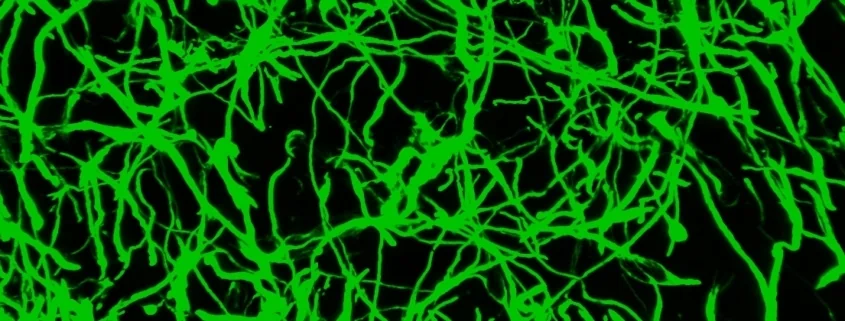
Tumor microtubes (TMs) connect glioma cells to a network with considerable relevance for tumor progression and therapy resistance. However, the determination of TM-interconnectivity in individual tumors is challenging and the impact on patient survival unresolved. Here, we establish a connectivity signature from single-cell RNA-sequenced (scRNA-Seq) xenografted primary glioblastoma (GB) cells using a dye uptake methodology, and validate it with recording of cellular calcium epochs and clinical correlations. Astrocyte-like and mesenchymal-like GB cells have the highest connectivity signature scores in scRNA-sequenced patient-derived xenografts and patient samples. In large GB cohorts, TM-network connectivity correlates with the mesenchymal subtype and dismal patient survival. CHI3L1 gene expression serves as a robust molecular marker of connectivity and functionally influences TM networks. The connectivity signature allows insights into brain tumor biology, provides a proof-of-principle that tumor cell TM-connectivity is relevant for patients’ prognosis, and serves as a robust prognostic biomarker.

Link to Publication

 Hai L, Hoffmann DC, Wagener RJ, Azorin DD, Hausmann D, Xie R, Huppertz MC, Hiblot J, Sievers P, Heuer S*, Ito J, Cebulla G, Kourtesakis A, Kaulen LD, Ratliff M*, Mandelbaum H, Jung E, Jabali A, Horschitz S, Ernst KJ, Reibold D, Warnken U, Venkataramani V*, Will R, Suvà ML, Herold-Mende C*, Sahm F*, Winkler F*, Schlesner M*, Wick W*, Kessler T.* A clinically applicable connectivity signature for glioblastoma includes the tumor network driver CHI3L1. Nat Commun. 2024 Feb 6;15(1):968. doi: 10.1038/s41467-024-45067-8. PMID: 38320988; PMCID: PMC10847113. * UNITE Principal Investigators

41586 2022 5520 Fig1 HTML


41586 2022 5520 Fig1 HTML

Research findings related to UNITE work package A01

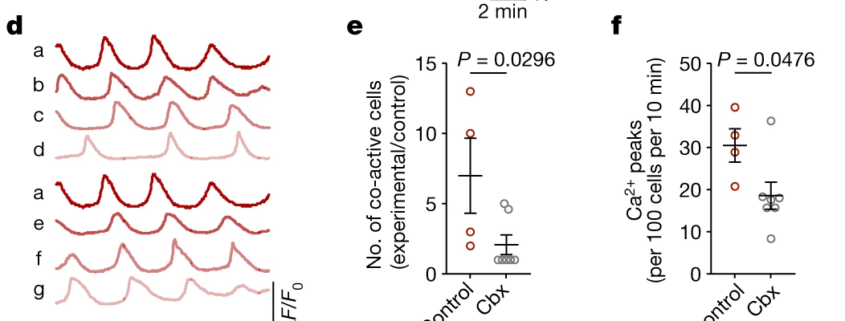
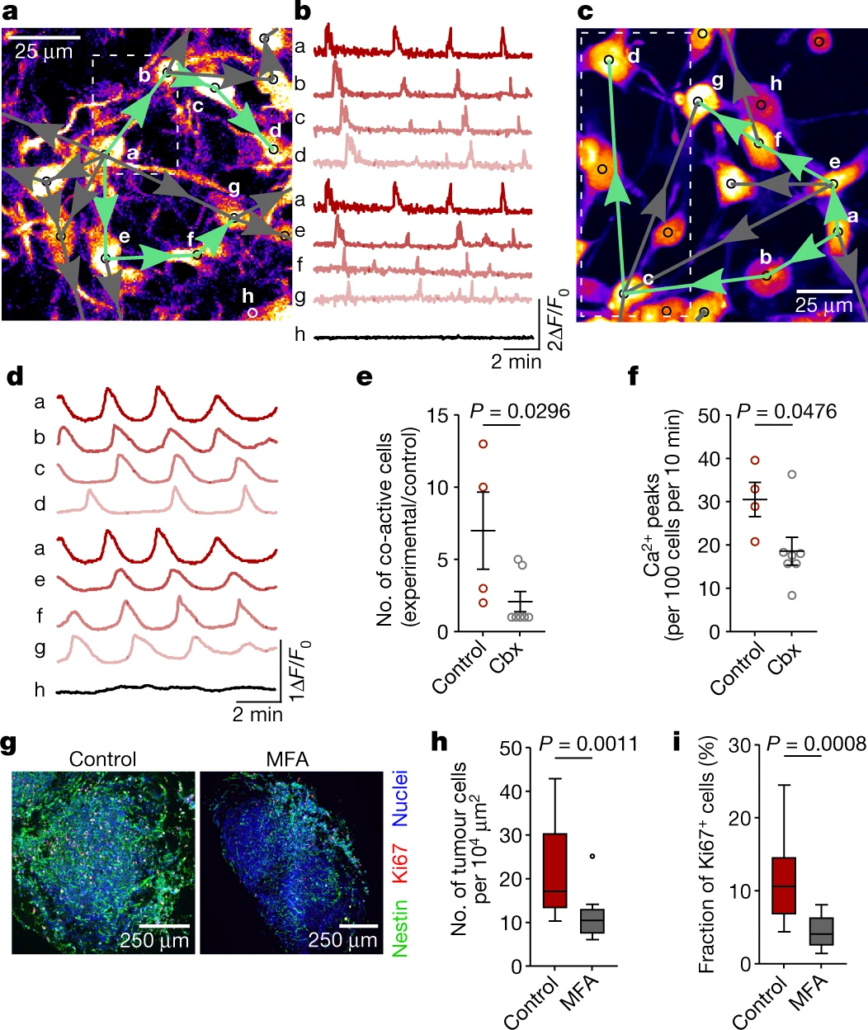
Diffuse gliomas, particularly glioblastomas, are incurable brain tumours. They are characterized by networks of interconnected brain tumour cells that communicate via Ca2+ transients. However, the networks’ architecture and communication strategy and how these influence tumour biology remain unknown. Here we describe how glioblastoma cell networks include a small, plastic population of highly active glioblastoma cells that display rhythmic Ca2+ oscillations and are particularly connected to others. Their autonomous periodic Ca2+ transients preceded Ca2+ transients of other network-connected cells, activating the frequency-dependent MAPK and NF-κB pathways. Mathematical network analysis revealed that glioblastoma network topology follows scale-free and small-world properties, with periodic tumour cells frequently located in network hubs. This network design enabled resistance against random damage but was vulnerable to losing its key hubs. Targeting of autonomous rhythmic activity by selective physical ablation of periodic tumour cells or by genetic or pharmacological interference with the potassium channel KCa3.1 (also known as IK1, SK4 or KCNN4) strongly compromised global network communication. This led to a marked reduction of tumour cell viability within the entire network, reduced tumour growth in mice and extended animal survival. The dependency of glioblastoma networks on periodic Ca2+ activity generates a vulnerability that can be exploited for the development of novel therapies, such as with KCa3.1-inhibiting drugs.

LINK TO PUBLICATION

Hausmann D, Hoffmann DC, Venkataramani V*, Jung E, Horschitz S, Tetzlaff SK, Jabali A, Hai L, Kessler T*, Azorín DD, Weil S*, Kourtesakis A, Sievers P, Habel A, Breckwoldt MO*, Karreman M*, Ratliff M*, Messmer JM, Yang Y, Reyhan E, Wendler S, Loeb C, Mayer C, Figarella K, Osswald M, Solecki G, Sahm F*, Garaschuk O, Kuner T, Koch P, Schlesner M*, Wick W*, Winkler F*. Autonomous rhythmic activity in glioma networks drives brain tumor growth. Nature. 2023 Jan 613 7942 179 186. *UNITE Principle Investigators

1 s2.0 S0092867423001046 gr1 lrg

1 s2.0 S0092867423001046 gr1 lrg

Research findings related to UNITE work package A01

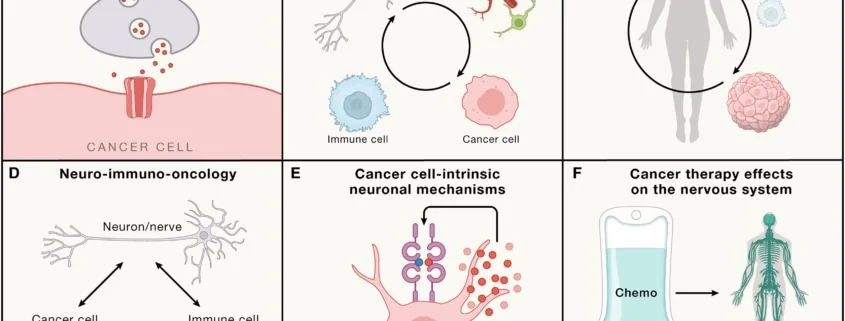
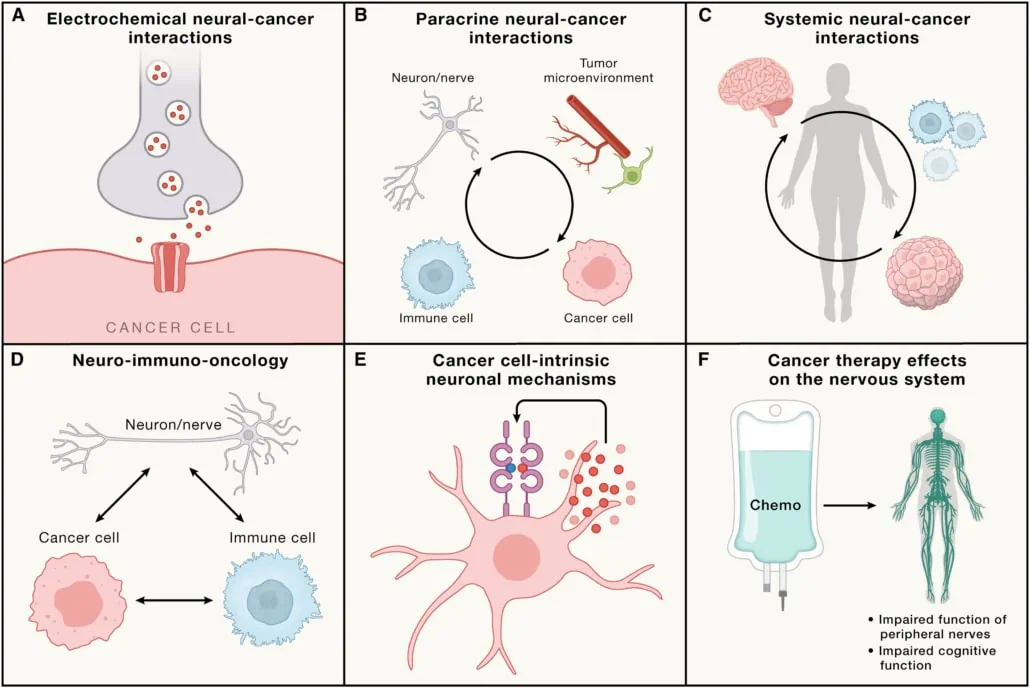
The nervous system governs both ontogeny and oncology. Regulating organogenesis during development, maintaining homeostasis, and promoting plasticity throughout life, the nervous system plays parallel roles in the regulation of cancers. Foundational discoveries have elucidated direct paracrine and electrochemical communication between neurons and cancer cells, as well as indirect interactions through neural effects on the immune system and stromal cells in the tumor microenvironment in a wide range of malignancies. Nervous system-cancer interactions can regulate oncogenesis, growth, invasion and metastatic spread, treatment resistance, stimulation of tumor-promoting inflammation, and impairment of anti-cancer immunity. Progress in cancer neuroscience may create an important new pillar of cancer therapy.

LINK TO PUBLICATION

Winkler F*, Venkatesh H S, Amit M, Batchelor T, Demir I E, Deneen B, Gutmann D H, Hervey-Jumper S, Kuner T, Mabbott D, Platten M*, Rolls A, Sloan E K, Wang T C, Wick W*, Venkataramani V*, Monje M. Cancer neuroscience: state of the field, emerging directions. Cell. 2023 186 1689 707. *UNITE Principle Investigators

3892fig2

3892fig2

Research findings related to UNITE work package A01

The EORTC-26101 study was a randomized phase II and III clinical trial of bevacizumab in combination with lomustine versus lomustine alone in progressive glioblastoma. Other than for progression-free survival (PFS), there was no benefit from addition of bevacizumab for overall survival (OS). However, molecular data allow for the rare opportunity to assess prognostic biomarkers from primary surgery for their impact in progressive glioblastoma. We analyzed DNA methylation array data and panel sequencing from 170 genes of 380 tumor samples of the EORTC-26101 study. These patients were comparable with the overall study cohort in regard to baseline characteristics, study treatment, and survival. Of patients’ samples, 295/380 (78%) were classified into one of the main glioblastoma groups, receptor tyrosine kinase (RTK)1, RTK2 and mesenchymal. There were 10 patients (2.6%) with isocitrate dehydrogenase mutant tumors in the biomarker cohort. Patients with RTK1 and RTK2 classified tumors had lower median OS compared with mesenchymal (7.6 vs. 9.2 vs. 10.5 months). O6-methylguanine DNA-methyltransferase (MGMT) promoter methylation was prognostic for PFS and OS. Neurofibromin (NF)1 mutations were predictive of response to bevacizumab treatment. Thorough molecular classification is important for brain tumor clinical trial inclusion and evaluation. MGMT promoter methylation and RTK1 classifier assignment were prognostic in progressive glioblastoma. NF1 mutation may be a predictive biomarker for bevacizumab treatment.

LINK TO PUBLICATION

Kessler T*, Schrimpf D, Doerner L, Hai L*, Kaulen LD, Ito J, van den Bent M, Taphoorn M, Brandes AA, Idbaih A, Dômont J, Clement PM, Campone M, Bendszus M*, von Deimling A*, Sahm F*, Platten M*, Wick W*, Wick A. Prognostic Markers of DNA Methylation and Next-Generation Sequencing in Progressive Glioblastoma from the EORTC-26101 Trial. Clin Cancer Res. 2023 Jul 26; CCR-23-0926. doi: 10.1158/1078-0432.CCR-23-0926. *UNITE Principle Investigators